
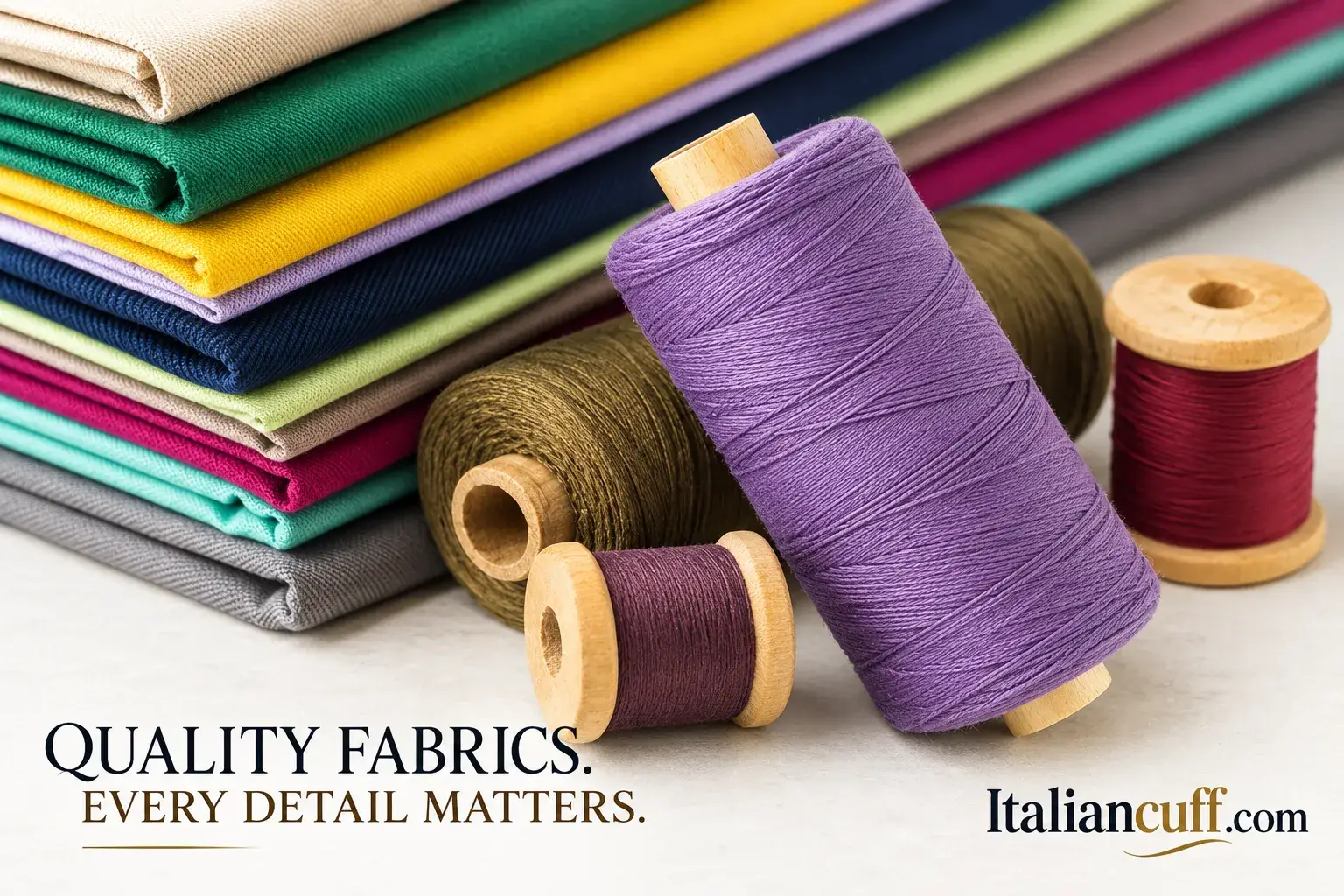
Textile terminology helps designers, tailors, buyers, and clothing enthusiasts understand how fabrics are made, measured, finished, and used. Knowing these terms makes it easier to compare materials, read fabric specifications, and choose suitable cloth for shirts, trousers, suits, and other garments.
Terminology Used In the Textile Industry
PC (Poly-Cotton): A blended fabric made from polyester and cotton fibres. The proportions affect its feel, breathability, durability, and care requirements, so check the composition label rather than relying on the abbreviation alone.
PV (Polyester-Viscose): A blend of polyester and viscose fibres. It is used in some suiting and uniform fabrics, with the final drape and comfort depending on the blend ratio and construction.
CP (Cotton-Polyester): A cotton-and-polyester blend. In some textile specifications, CP indicates a cotton-rich blend, but the abbreviation can vary between suppliers. Confirm the stated fibre percentages before purchasing.
TR (Terylene/Rayon or Polyester/Viscose): A trade abbreviation commonly used for polyester-viscose suiting blends. Since naming conventions vary, check the supplier’s exact fibre composition.
GSM (Grams per Square Metre): A measure of fabric mass per square metre. GSM helps compare fabric weight, but it does not by itself determine warmth, quality, or durability; fibre type and weave also matter.
Ounce per Yard: A fabric-weight measurement sometimes used in textiles, especially denim. Confirm whether a specification refers to ounces per square yard or another yard-based measurement, as the units are not interchangeable.
Colour Bleeding: The release or transfer of dye during washing or when fabric comes into contact with moisture. Separating new, strongly coloured garments and following care instructions can help reduce unwanted colour transfer.
Fabric Shrinkage: A reduction in a fabric’s length or width after washing, steaming, heat exposure, or finishing. Shrinkage varies by fibre and construction, so pre-shrinking or suitable care may be important before cutting and stitching.
Colourfastness: The ability of a fabric’s colour to resist fading or transfer when exposed to washing, rubbing, light, or perspiration. Different tests measure different types of colourfastness.
Knit Fabric: Fabric formed by interlooping yarns. Knits often stretch more readily than comparable woven fabrics, although their stretch and recovery depend on the yarn, stitch structure, and any elastane content.
Woven Fabric: Fabric made by interlacing two main sets of yarns at roughly right angles. Woven constructions include plain weave, twill, and satin, each creating a different surface and performance.
GLM (Grams per Linear Metre): A measure of the mass of a length of fabric at a specified width. Because width affects the result, GLM should not be compared directly with GSM without the necessary dimensions.
RFD (Ready for Dyeing): A fabric or textile material prepared for a subsequent dyeing process. The exact preparation steps depend on the fibre, construction, and mill process.
Dyeable Fabric: Material suitable for accepting dye under the appropriate processing conditions. The result depends on fibre content, preparation, dye chemistry, and the method used.
Greige Fabric: Fabric in its unfinished state after knitting or weaving and before the full range of wet processing or finishing. It is not necessarily grey or beige in colour.
Upholstery Fabric: Material selected for furniture and interior uses, such as chairs, sofas, and cushions. Strength, abrasion resistance, colourfastness, and cleaning requirements are important considerations.
Bio-Wash: A finishing treatment, often using enzymes on suitable cellulosic fabrics, to modify surface fibres and improve the fabric’s feel or appearance. The result depends on the fabric and process.
Gingham: A woven check pattern typically formed by coloured yarns crossing one another, often using white and another colour. It is commonly seen in shirts and lightweight clothing.
Houndstooth: A broken-check pattern traditionally created through a particular arrangement of light and dark yarns in woven cloth. It is frequently used for jackets, coats, trousers, and suits.
Mandala Print: A printed design based on a circular, often symmetrical arrangement of decorative motifs. It describes a design style rather than a specific weave or fibre.
Patchwork: A design or construction made by joining separate pieces of fabric. Patchwork may be created with woven, knitted, printed, or differently coloured materials.
Twill Weave: A weave structure that creates diagonal lines on the fabric surface. Denim, chino cloth, and many suiting fabrics use twill variations.
Basket Weave: A variation of plain weave in which two or more yarns are interlaced together in a basket-like arrangement. It can create a visible texture and a more open-looking surface.
Shirting Fabric: Fabric intended for making shirts. Cotton, linen, and blended fibres are common choices; the right option depends on the desired softness, breathability, drape, opacity, and ease of care.
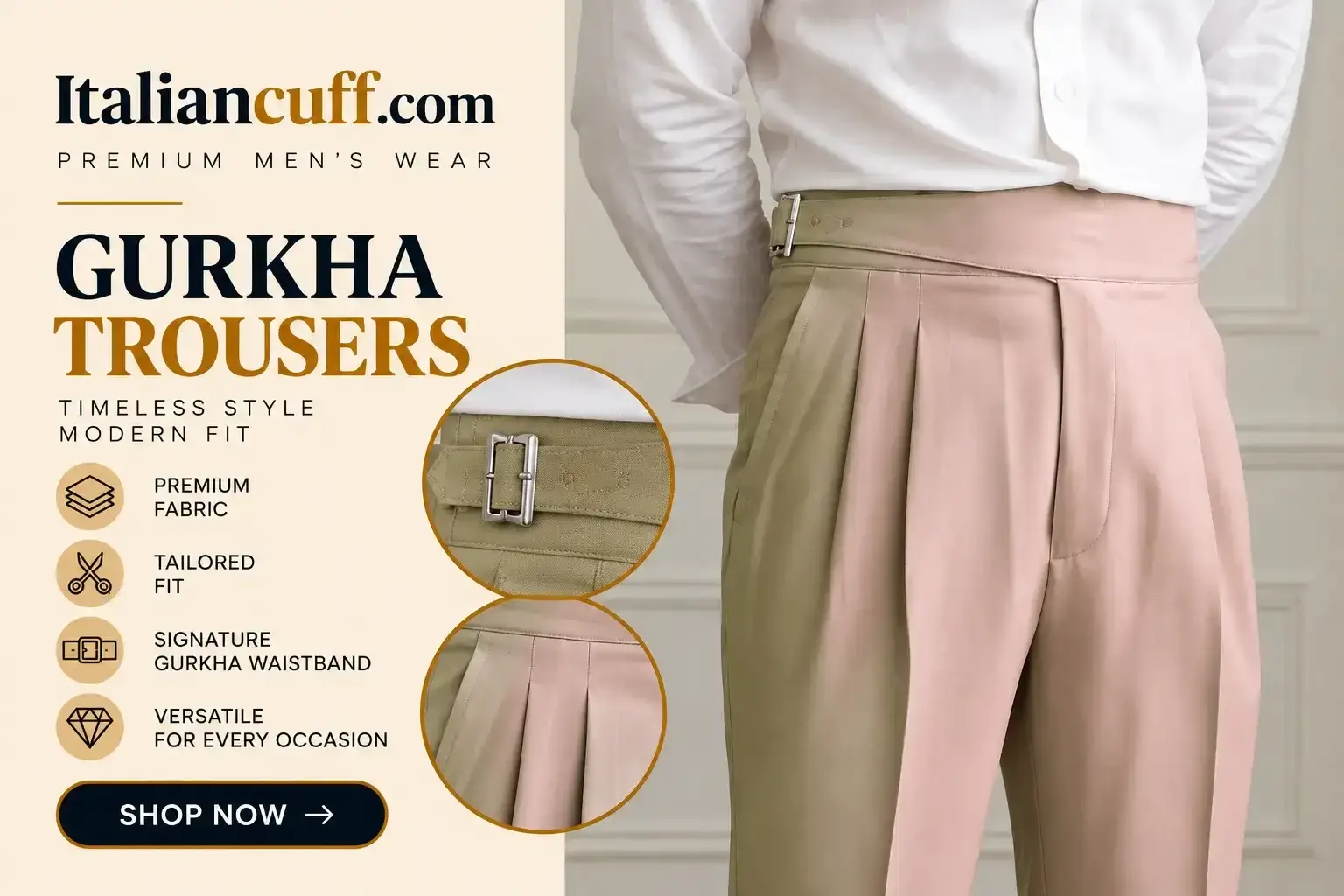
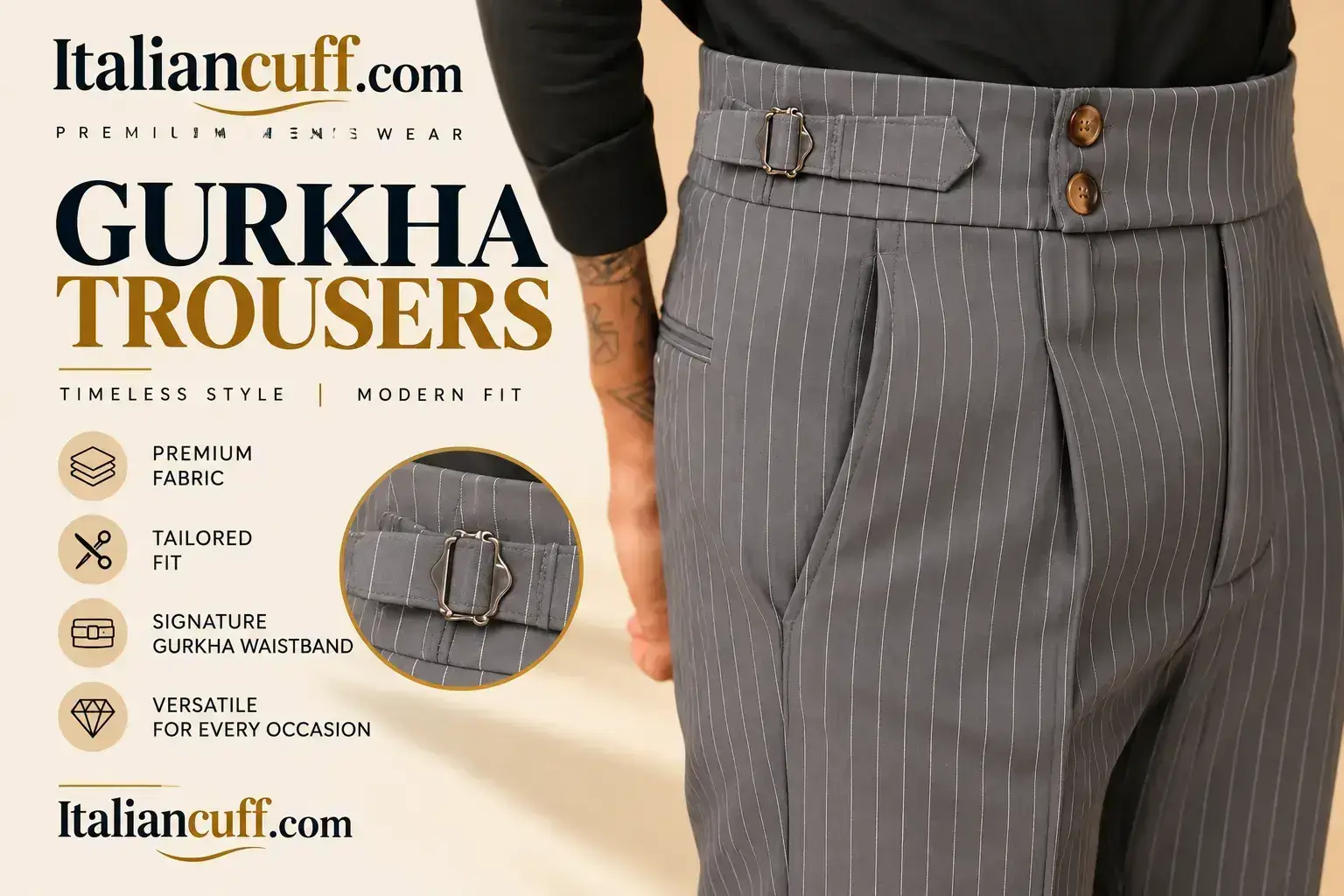
Suiting Fabric: Material selected for suits, tailored trousers, blazers, and waistcoats. Wool and wool blends are common, while other fibres may suit different budgets, climates, and garment requirements. For a tailored trouser look, you can also explore ItalianCuff.com and its planned Gurkha Pants collection.
Brocade: A figured fabric in which decorative patterns are woven into the structure, often with a raised or richly textured appearance. It is used for occasionwear, formal garments, and decorative textiles.
Fusible Interlining (Fusing Fabric): A supporting material with an adhesive coating that can be bonded to another fabric using controlled heat and pressure. It helps add shape or stability to areas such as collars, cuffs, and waistbands.
Combed Yarn: Yarn made from fibres that have undergone an additional combing stage to remove many short fibres and align the remaining fibres. The process can produce a smoother, more uniform yarn.
Burlap (Hessian): A coarse, plain-woven textile commonly made from jute. It is often used for sacks, packaging, craft projects, and some decorative applications rather than soft apparel.
AOP (All-Over Print): A print design that extends across most or all of a fabric or garment, rather than appearing only in one limited area.
Selvedge (Selvage): The finished edge running along the length of woven fabric that helps prevent it from unravelling. The edge construction differs by loom and fabric type.
Man-Made Fibre: A fibre produced through a manufactured process. This broad group includes synthetic fibres such as polyester and regenerated fibres such as viscose; these categories are not identical.
EPI (Ends per Inch): The number of warp yarns across one inch of woven fabric. EPI is one factor that influences fabric density and appearance.
PPI (Picks per Inch): The number of weft yarns across one inch of woven fabric. Together with EPI and yarn size, it helps describe the fabric construction.
Warp: The yarns running lengthwise through woven fabric. Warp yarns are held under tension during weaving.
Weft: The yarn inserted across the width of woven fabric, passing over and under the warp yarns to form the weave.
Blend: A textile made using two or more fibre types in a yarn or fabric. Blending can balance properties such as softness, strength, stretch, appearance, and care needs, depending on the fibres and proportions.
These terms are useful when reading fabric labels, comparing suppliers, or discussing material choices with a tailor. Always check the full composition and product specifications, because abbreviations can differ between manufacturers.
When choosing fabric for trousers, consider its weight, drape, weave, comfort, and care instructions alongside the intended fit. If you are exploring tailored styles, visit ItalianCuff.com to discover the store and its Gurkha Pants direction as the collection develops.

Leave a Reply